fata morgana 2021 - 2022
Fata Morgana was a starting point from which to explore the complex, entangled relationship of the presence and activities of the Ministry of Defense and NATO in the waters surrounding the Hebrides, and the communities which live on these islands.
A Fata Morgana is a pelagic mirage caused by light refracting as it travels through a layer of cool air sitting beneath a layer of warm air. Familiar maritime objects such as islands, ships and lighthouses appear to float, invert and grow bigger; reality and illusion combining in enigmatic, shifting forms which have historically terrified mariners and confused cartographers from the Arctic to the Antarctic. Clear light, the Gulf Stream’s influence, and a circle of sea horizons make Fata Morgana a common enough phenomenon in the Hebrides, and I have often seen these otherworldly visions on a still, clear day off the south coast of Iona, where I live. Italian for the Fairy Morgana, the name comes from the Celtic legend of King Arthur, Morgan le Fay being the King’s fairy half-sister; a shape-shifting being who is part fairy, part woman and who embodies the duality of good and evil, healer and destroyer, illusion and reality, in one form.
The complex duality of Fata Morgana could reflect the contrasting opinions and perceptions which existed in the local community on Uist, and nationally, in response to the siting of the first UK nuclear warhead testing range on South Uist in 1954, and equally to the continued developed presence of the Ministry of Defense and NATO in the Hebrides and the impact of this presence and associated activities on senstive natural and cultural ecologies .
In considering the impact of the military presence in the Hebrides there could be much to gain by looking at it through the language of storytelling and myth, given the MoD occupies vast areas of land and has agency over seas which have traditionally inspired poetry, music and song since the time of Columba. As Donna Haraway puts it, “It matters what ideas we use to think other ideas with; it matters what stories we tell, to tell other stories; it matters what stories make worlds and what worlds make stories”.
The engine fuselage shown in the vitrine is a fragment from a Meggitt BTT-3 Banshee military target drone. The drone is used in air defence systems training on the rangehead at West Geirinish, on the South Uist missile range - the largest air and sea range in the UK. Also named for a fairy, the ban-sìthe or fairy woman who laments and warns of impending death, this drone represents a fabulous example of misogynistic appropriation of language, culture and mythology by aerospace company Meggitt.
Using fragments from the drone, I formed a digital Fata Morgana of my own; a fairy illusion, a duality of destruction and creation which floats beyond my own psychological horizon. The historical social, moral and economic arguments for and against the Hebrides range are relevant to a wider contemporary consideration of the contribution, or not, of the MoD presence in the Hebrides to the velocity of what some academics considered an ongoing terminal decline of a culture and its language, already forced to the margins through extraction of its people.
Shown first as part of Tìr an Airm/Land of the Army (2021), curated by Dr Alex Boyd at Stills Gallery, Edinburgh, and subsequently in developed form within In Search of the Pluriverse (2022), Sophie Krier and Erik Wong's transdisciplinary fieldwork project at Het Nieuwe Instituut, Rotterdam.
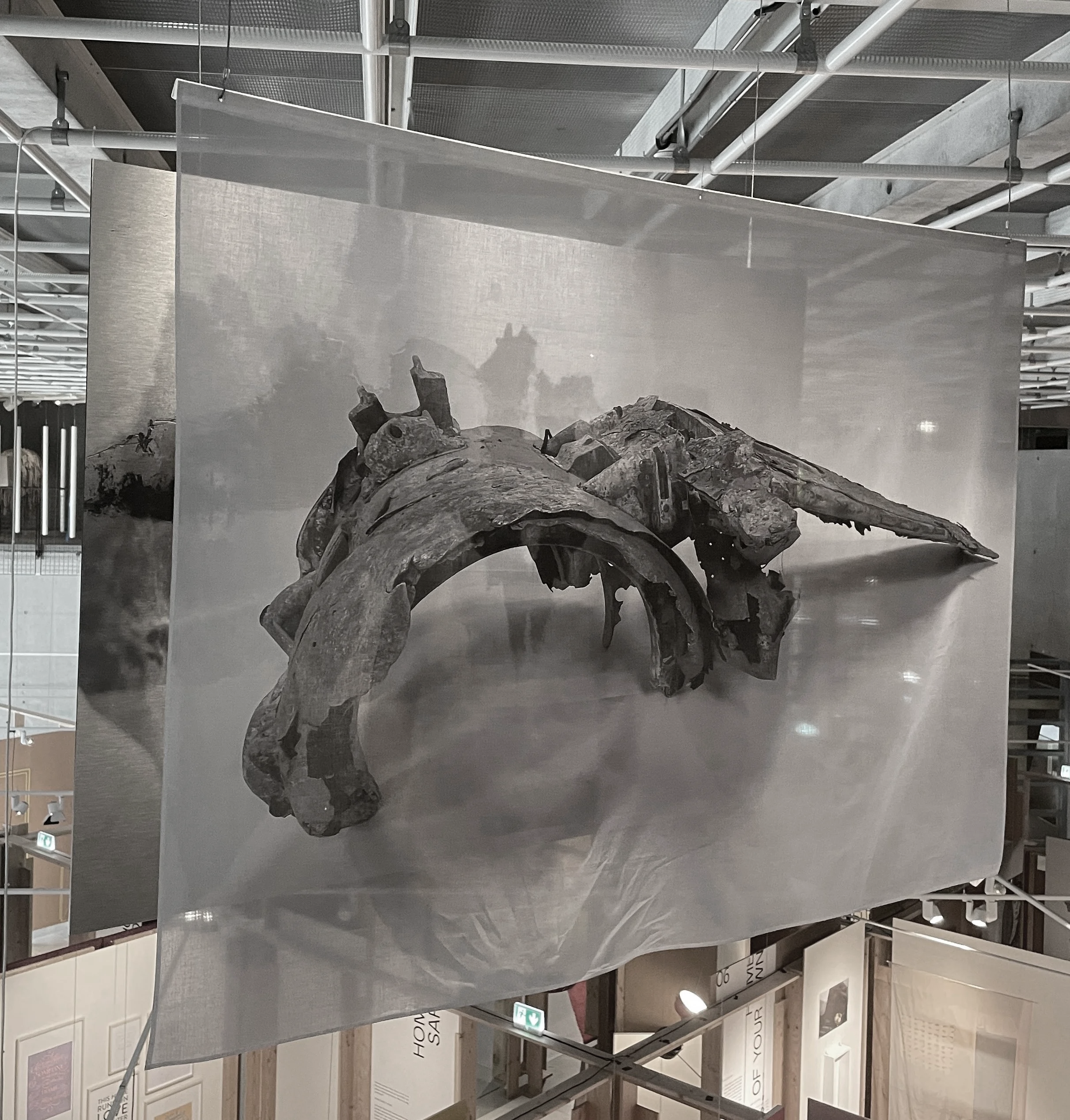
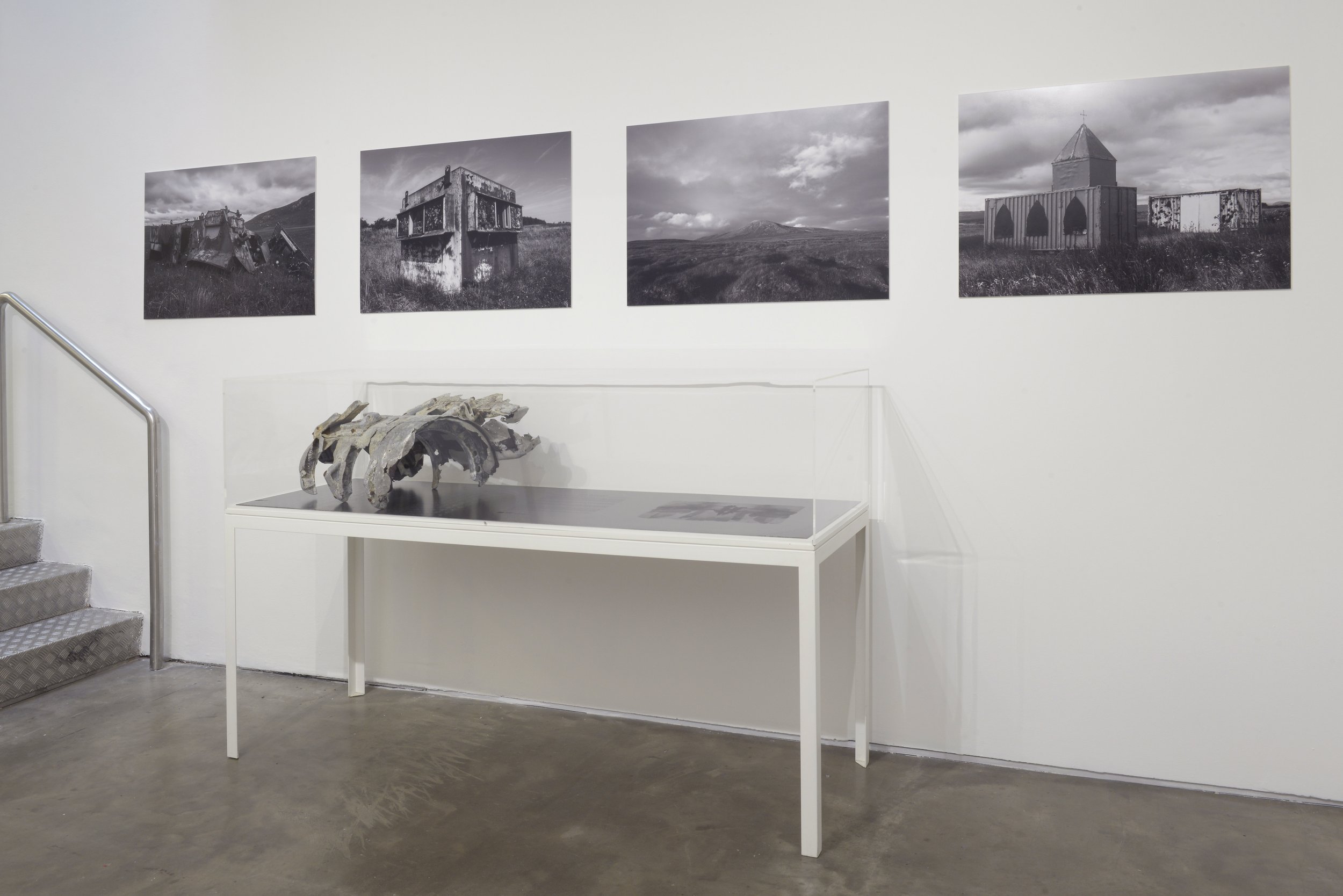
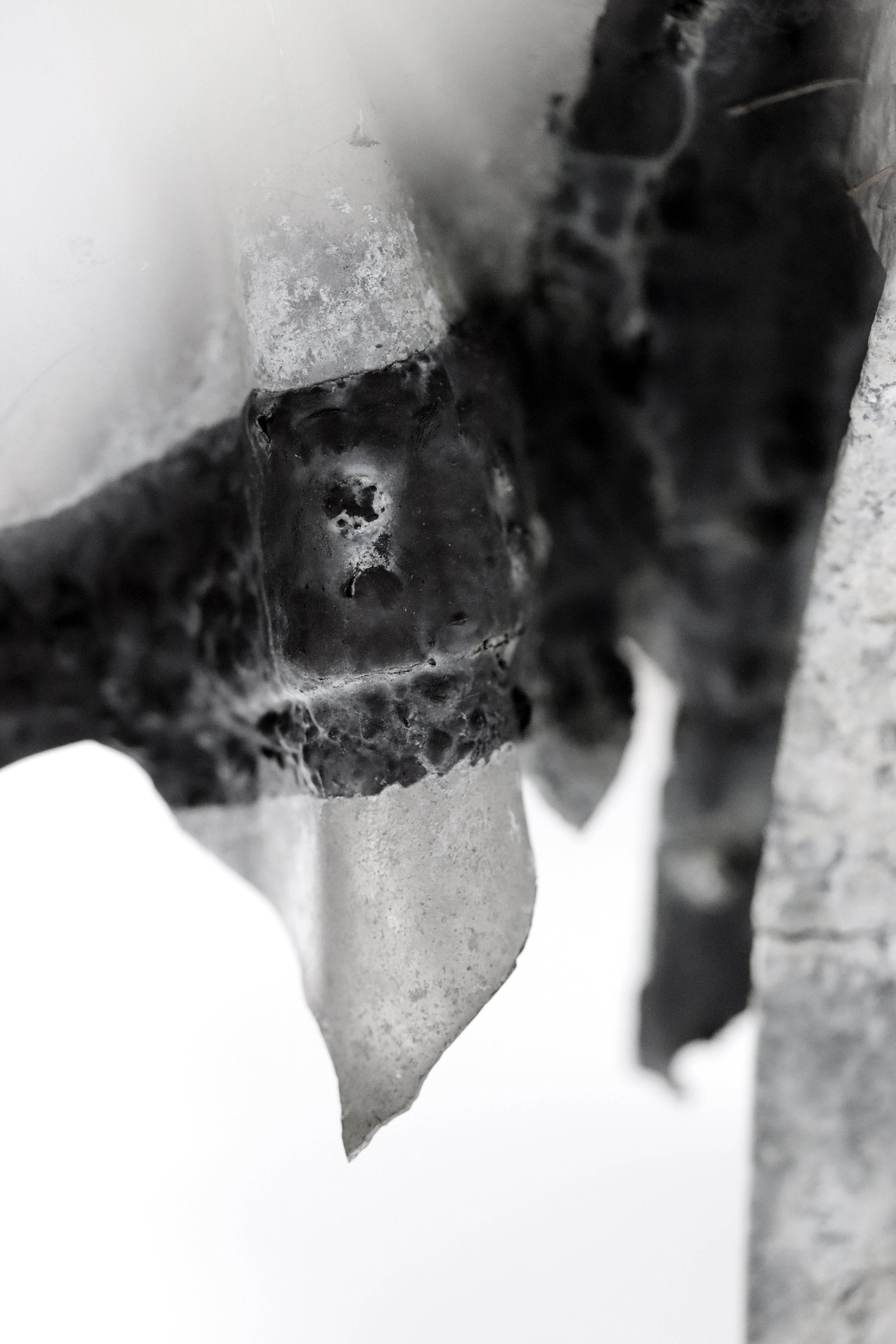
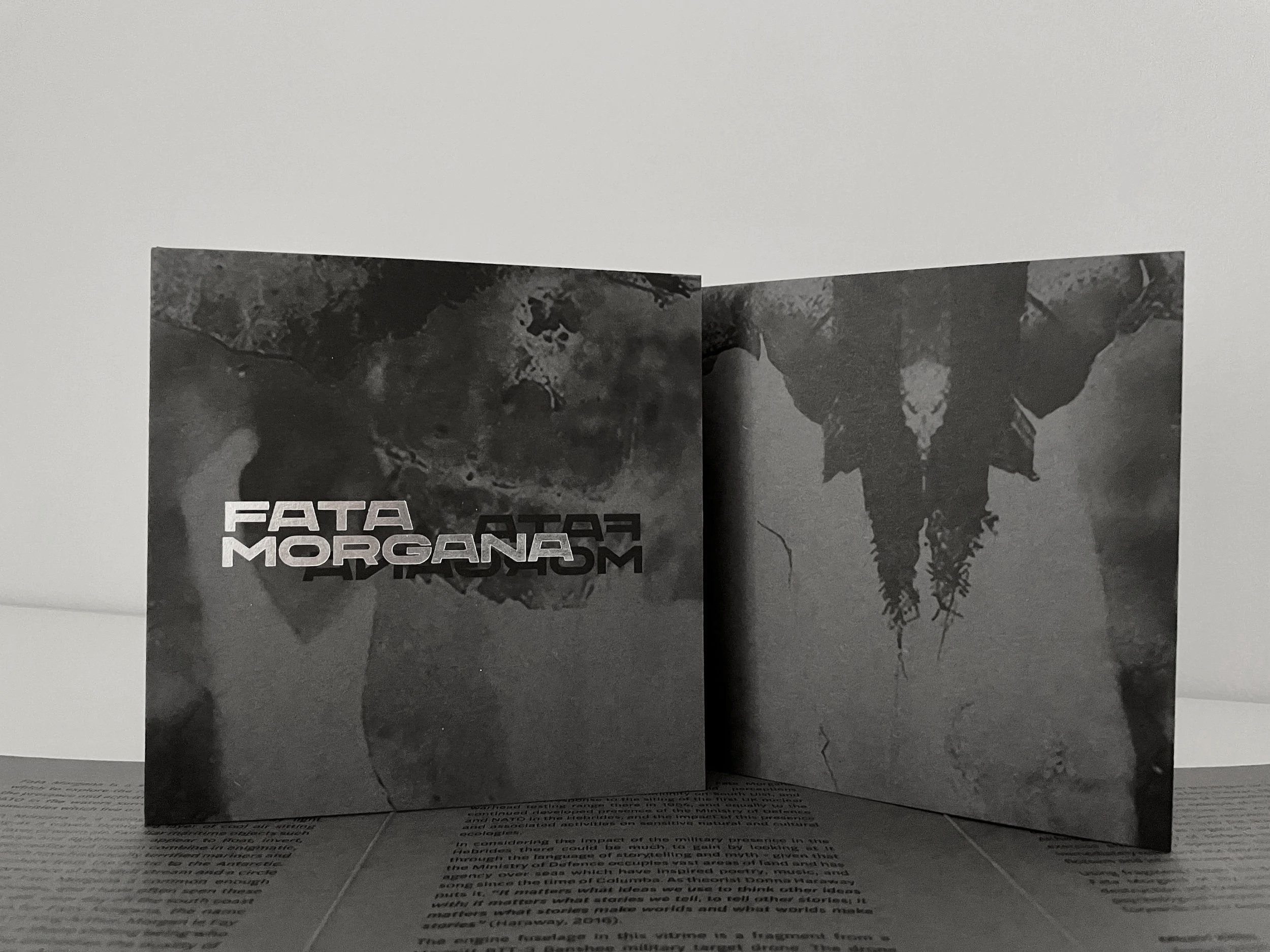
Images left to right: Installation, In Search of the Pluriverse, 2022, Mhairi Killin; detail of digital print on aluminium, Mhairi Killin; Vitrine installation, Tìr an Airm/Land of the Army (2021), Alan Dimmick; Project publication, Mhairi Killin.